
Cast stone has been used in Britain since Georgian times as an alternative to carved natural stone which it can stand alongside in appearance and performance but is more readily available and normally costs significantly less.
Cast stone can beat quarried natural stone on compressive strength, moisture penetration, colour and textural consistency. It’s free from imperfections and stratification is never an issue..
Independent research by Dundee University has shown that cast stone can weather like natural stone and it looks very much the same.
Cast Stone is regularly used for extension, refurbishment and conservation work, including areas of sensitive planning constraints or where stone is a predominant material. Its use in restoration and conservation includes the replacement or repair of quarried natural stonework damaged by exposure or neglect.
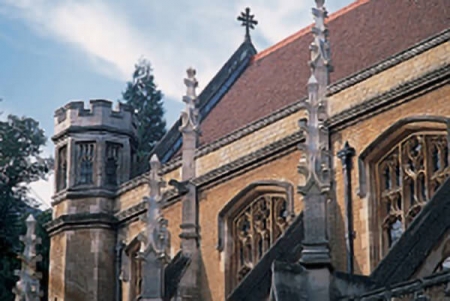
All types of architectural and ornamental stonework can be produced – large, small and structurally reinforced – and cast stone’s ability to form complex shapes makes it ideal for ornate detailing. Many manufacturers have built up big ‘libraries’ of moulds of standard details, so designers seldom have to reinvent the wheel the get the look they want. And since these are based on centuries-tested stone details, they work first time.
A typical use of cast stone in construction is for dressings around opening in buildings, such as window surrounds, including lintols (or lintels), heads and cills (or sills) and keystones, and also door surrounds.
Cast stone is regularly used for architectural dressings to the external walls of houses and buildings, with items such as string courses, band courses, plinth courses, masonry blocks and quoins regularly being used.
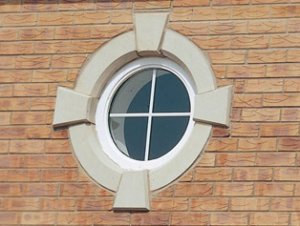
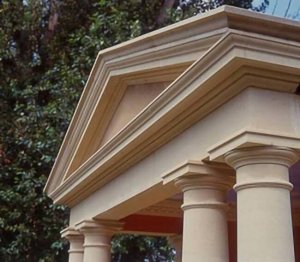
Further enhancements, and improvements to the kerb appeal of buildings, can be made by adding a cast stone structure, such as portico, to the design of the building.
The cast stone elements of a portico include columns and pilasters, and entablatures with cornices and architraves.
The areas around a building should not be neglected.
Cast stone balustrading, parapet screening, plaques, brackets and corbels can all be considered.
Cast stone hard landscaping items can include paving slabs, steps, treads and risers.
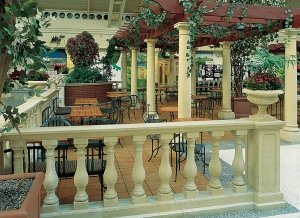
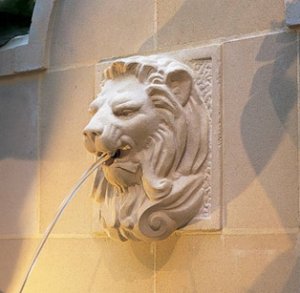
Decorative cast stone items for the garden also include planters, statuary, obelisks, pedestals and pavilions.
Water features, such as pools and fountains, are also available in cast stone.
Walls of the building, garden walls and boundary walls will all be greatly improved by the incorporation of cast stone.
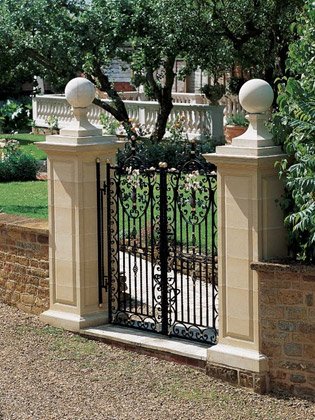
Cast stone copings, cappings, pier caps, gate piers, spheres and finials are all available and can all be utilised to enhance a property.
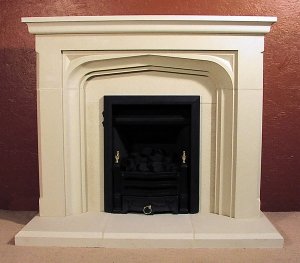
The inside of the building is also catered for with internal door surrounds, chimney pieces, fireplace surrounds, ornaments and pedestals, all being available in cast stone.
In fact any items which would traditionally and historically have been manufactured in quarried natural stone are now readily available in cast stone, and with considerable savings over the natural stone versions usually being available.
Further information on the compressive strength performance of cast stone compared to natural stone is available on this site.


